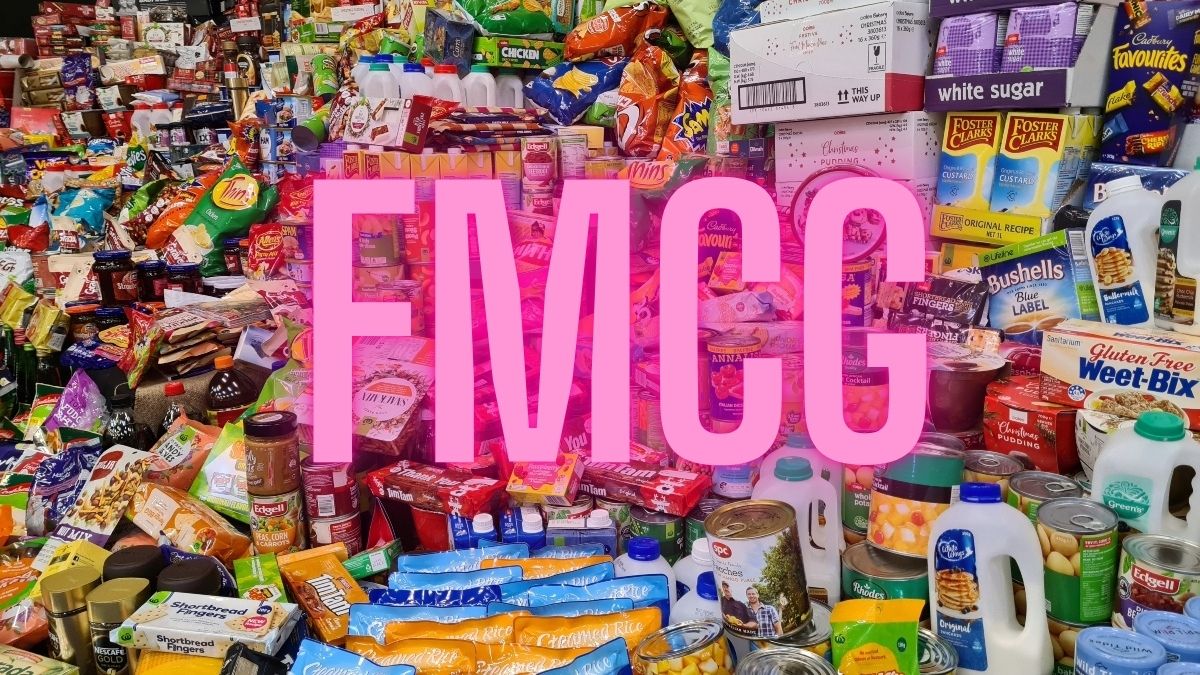
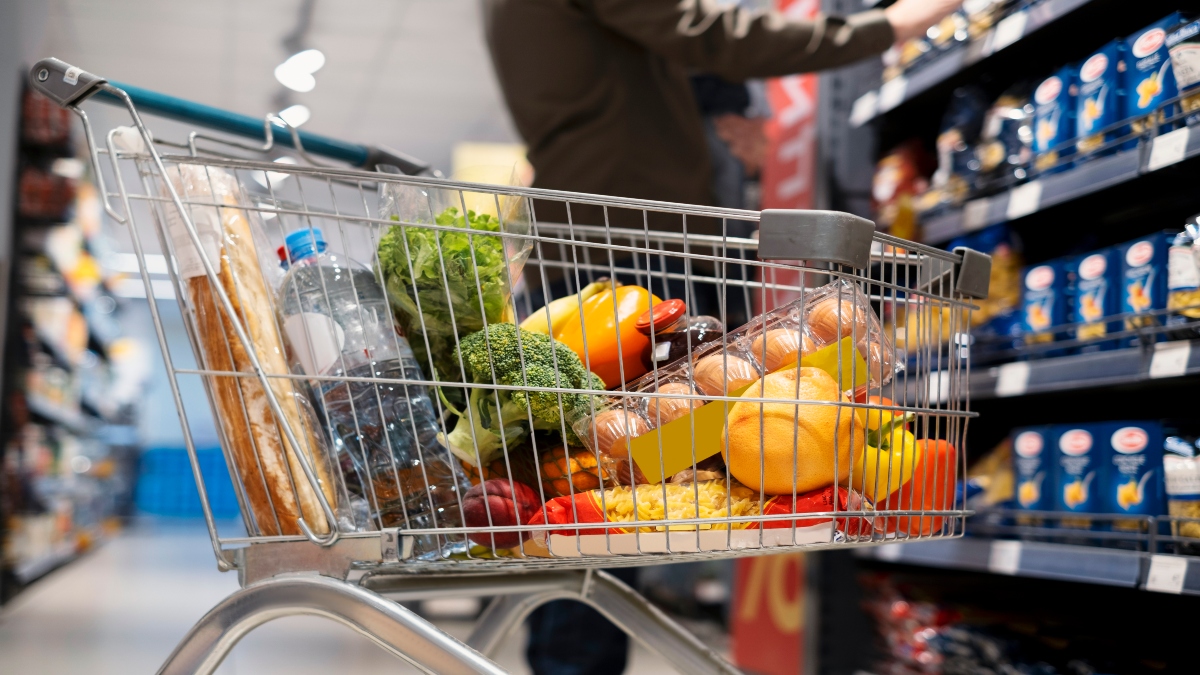
Decades ago, when the world moved like a slow machine, the FMCG sector was already operating in the fast lane, driven by strong consumer demand. Today, the FMCG sector holds an oceanic presence in India’s retail market. In this new generation, life without FMCG products is unimaginable. From the time we wake up until we go to bed, we use these products daily. Don’t believe it? Take a look at your home. Your washroom has soaps and toothpaste, your bedroom has personal care creams and talcum powders, and your kitchen is filled with cooking ingredients, dairy products, snacks, and beverages. This reflects the extent to which FMCG products have penetrated the Indian households. Hence, they are often considered a part of everyday life. So, how do FMCG companies support our needs? Let us explore this industry in a bit more detail.
Meaning and Definition of FMCG products
FMCG is an abbreviation of Fast-Moving Consumer Goods. As the name indicates, these goods are fast moving. The products move rapidly from production units to retail stores and then to the consumers. This means they are sold fast and consumed even faster. The products include items that are frequently used in daily life. FMCG companies sell them in huge volumes with low profit margins to keep them affordable for consumers.
The main aim of FMCG companies is to produce daily essential products in bulk quantities and market them to sell quickly at affordable prices. The other objective is to make their products readily available across the rural and urban areas of the country. So, FMCG marketing refers to the strategies designed to promote and sell high-volume products at relatively low prices.
It focuses on selling large quantities at low margins rather than small quantities at high margins. The FMCG products mainly include food, beverages, personal care products and household goods. Such products generally have a short shelf life as they are consumed quickly. The strategies are achieved through effective advertising, attractive packaging and a wide distribution network.
Why are FMCG products important in our daily lives?
Many businesses began with the idea of fulfilling our daily human needs. It was observed that certain products were bought repeatedly and consumed rapidly. They were not always basic necessities of life, but they were needed for daily living. Such goods were regarded as essential items that supported our daily survival. These FMCG products are important for the following reasons –
1) FMCG companies produce and distribute food items like snacks, chocolates, milk, baby foods, etc. They also produce personal care items like toothpaste, soap, face powder, shampoo etc. In addition, they deal in cleaning products like detergents, phenyl, disinfectants, etc. These products are needed to maintain nutrition, hygiene and good health.
2) FMCG companies also produce packaged products that are ready-to-use. The standard quality of these products is maintained to gain customers’ trust. Hence, consumers do not need to prepare everything from scratch. This saves the time and effort of customers.
3) FMCG products like cosmetics, soft drinks, stationery, air fresheners, skin creams, perfumes, etc. improve the quality of our lives.
4) FMCG companies have millions of employees working for them. Their products support farmers and manufacturers. They contribute to the success of retail businesses and supermarkets. All in all, they support the growth of the economy.
Why is the FMCG industry important for India?
In a highly populated country like India, the consumption of FMCG products occurs on a very large scale. To support their production and distribution, it becomes important for the FMCG industry to thrive across the country. The benefits offered by this industry are listed below:
1) Contribution to Economic Growth: In the Indian economy, the FMCG industry is regarded as the fourth-largest sector. This reflects its huge demand and its gigantic size. As a result, it contributes significantly to the GDP growth. This industry caters to customers from all sections of the society, whether rich or poor, rural or urban. Consumption at such a large scale has a positive impact on the country’s economic growth.
2) Employment opportunities: The continuous demand for daily products leads to steady manufacturing and distribution of household products. Hence, the industry provides adequate employment opportunities at all times.Studies estimate that the FMCG industry employs around 3 million people in India. When more people earn wages, the overall national income increases, thereby strengthening the economy.
3) Rural and Urban development: The overall development of a nation involves the growth of both rural and urban areas. The FMCG sector serves consumers across the length and breadth of the country. With the market expanding at a rapid pace, the distribution networks in villages create employment opportunities for retailers, transporters and small entrepreneurs. As FMCG spending has raised the revenues of the companies, it has also encouraged infrastructure development to better serve the rural markets.
4) Attracts Investments: India has a large consumer base for FMCG products. Steady demand makes revenues relatively predictable. Investors always prefer to invest in sectors that provide steady returns with low risk and regular cash flow. The FMCG sector maintains a consistent quality in its branded products through research and innovation. Strong branding and reliable returns encourage further domestic and foreign investments.
5) Supports growth of other sectors: The FMCG industry is closely linked with manufacturing business, wholesale trade, retail trade, supply chains, agriculture, and e-commerce. Its consistent growth has led to an expansion to its related sectors. Since FMCG acts as the backbone of all household trades, they ensure steady income for wholesale traders and high turnover for the retail stores. The strengthening of the transportation and warehousing sector has modernized the supply chains and its logistics. The consistent demand has also created a stable market for the farmers. It has brought about an improvement in the rural income and agricultural productivity. Finally, the growth of online retail platforms and digital payments has boosted the e-commerce business.
Around 65% of India’s population lives in villages. Interestingly, rural areas are experiencing rapid growth due to the green revolution impact, the use of modern agricultural equipment, and the improvement in irrigation facilities. There is also a significant expansion in infrastructure, communication networks, and digital services. Programs like Skill India, rural banking campaigns and digital literacy initiatives have promoted innovation and entrepreneurship in villages.
This high-volume development has led to an increase in the purchasing power of rural consumers. Large organizations have identified the huge potential for FMCG sales in rural areas. As a result, FMCG companies are focusing on rural marketing for the promotion of their FMCG products. For the purpose of raising awareness, companies are investing in branding campaigns among the rural customers. Such initiatives have increased the demand for daily-use products and has provided the consumers with better options. In addition, the robust distribution networks ensure product availability on a continuous basis in the remote areas. With urban markets reaching its capacity, the shifting of focus to rural marketing has become a highly viable option for FMCG companies.
What is the product cycle of FMCG?
The FMCG product cycle follows four stages:
The Introduction stage: After conducting necessary research, when the product is launched, it has limited awareness among the people. This results in slow and low sales.
The Growth stage: With rapid advertising, the branded product gains visibility among the masses. Consumers try them, and if satisfied, they continue buying them, driving the sales upward.
The Maturity stage: Once sales reach their peak, a slow down in the sales volume is typically observed. This usually happens due to intense price competition that lowers the profit margins of the product.
The Decline stage: As the product becomes widely used, it loses its novelty. With intense competition, people begin expecting something new, which leads to a shift in their preferences. At this stage, sales decline and revenues decrease.
Can I build a successful career in the FMCG field?
Yes. A career in FMCG marketing is considered one of the most promising careers in India. Since the demand for FMCG products remains high and stable, products in a newer form will keep emerging in the market. With intensive research and ongoing innovations, consumers will keep experiencing a variety of products.
Several FMCG companies have been operating in India for decades. Many foreign companies have also entered this sector increasing job opportunities for the youth. An MBA in marketing is the most preferred qualification for a career in this industry. Candidates with strong communication and sales skills can enjoy a steady career growth in the FMCG sector. The rise of digital marketing has broadened the scope of advertising to target audiences, reducing costs for companies while increasing revenue.
FMCG is an industry characterized by high and consistent demand for its products, driven by their essential nature. This stability provides a sense of job security among the employees.
Conclusion
FMCG products are undeniably an integral part of consumers’ daily lives. More than 50% of the advertisements viewed in the media pertain to the fast-moving consumer goods. Without these products, the daily lives of the citizens would be significantly affected. The economy would also face severe consequences if the FMCG industry were to shut down. This sector has made a significant contribution to the growth of the Indian economy. It is the existence of this sector that has brought about a phenomenal improvement in the infrastructure and the distribution network across the country. In conclusion, the consumption of FMCG products has directly contributed to the prosperity of the nation.
FAQs
1) What are the 4 P’s of FMCG?
The 4 P’s of FMCG are Product, Price, Place, and Promotion.
2) What are the four pillars of FMCG?
The four pillars of FMCG are Availability, Acceptability, Affordability and Visibility.
3) What certifications should FMCG products have in India (FSSAI, ISI, etc.)?
To ensure food safety standards, the law mandates FMCG products to have FSSAI certification. For labeling compliance, the law mandates Legal Metrology. For designated packed items, BIS/ISI mark is mandatory. For specific agricultural products, AGMARK quality certification is required. For brand credibility and certain business requirements, the FMCG companies may obtain ISO 22000 & HACCP certification. In addition, the Veg/Non-Veg symbol is mandatory for packaged food products. Similarly, Organic Certification is needed for products marketed as organic.
4) Are FMCG products cheaper online or offline?
Generally, FMCG products are often cheaper online as operating costs are lower. Where the direct-to-consumer model is adopted, the intermediaries are eliminated. In addition, to acquire customers, some e-commerce platforms offer huge discounts, which further reduces the prices of FMCG products for the consumers. However, in certain situations, purchasing from offline retailers can be cheaper, especially when big retail giants offer substantial discounts with no delivery fees.
Connect me
Need quality content that connects with your audience? I craft clear and compelling writing tailored to your needs. Reach out to discuss your next project.